
High-Income Skills: What Actually Pays Well (and Why)
Why “High-Income Skills” Are Often Misunderstood
When people talk about high-income skills, they usually mean skills that promise fast money. That’s where most advice goes wrong.
In reality, high-income skills are not about shortcuts. They’re about skills that scale with responsibility and impact. A skill pays well over time because it helps organizations:
- solve expensive problems
- generate revenue
- reduce risk or inefficiency
- operate more effectively at scale
This is why many “trending” skills fail. They attract attention quickly, but demand fades once the market is crowded or the skill stops delivering clear results.
Another common misunderstanding is assuming a skill alone creates income. Skills create income only when they’re applied in a role, project, or outcome. Without context, proof, and positioning, even strong skills don’t turn into salary growth.
A more accurate way to think about high-income skills is this:
A skill pays well when it consistently helps someone make better decisions, deliver better results, or handle higher-stakes work.
That perspective filters out hype and keeps your career development grounded.
What Actually Makes a Skill “High Income”
A skill becomes a high-income skill when it meets a few practical conditions. It’s not about popularity or buzzwords—it’s about how the skill functions in real work.
1) The skill solves a costly problem
Skills that pay well usually address problems that cost time, money, or growth when they’re not handled properly. The more expensive the problem, the more valuable the skill.
2) Results can be measured or observed
High-income skills tend to produce outcomes that are easy to explain:
- revenue generated
- errors reduced
- processes improved
- decisions improved
When results are visible, salary growth becomes easier to justify.
3) The skill scales with experience
Some skills top out quickly. Others grow stronger with experience and context. Skills that scale—like analysis, system design, leadership, or technical specialization—support long-term career growth.
4) Demand exists across multiple companies
A skill is more resilient when it’s useful in many environments. This flexibility reduces risk and keeps earning potential stable even when roles change.
5) The skill requires judgment, not just execution
Execution-only skills are easier to replace. Skills that involve judgment, prioritization, and decision-making tend to support higher pay.
Understanding these factors helps you choose skills with high earning potential instead of chasing trends that fade.
Skill Categories That Consistently Pay Well
Instead of chasing individual tools or trends, it’s more useful to understand skill categories that repeatedly lead to higher income across industries. These categories stay relevant because they map to how businesses actually operate.
Technical & Systems Skills
These skills support infrastructure, data, and systems that organizations depend on.
- software development and scripting
- data analysis and reporting
- IT systems, cloud, and security support
- automation and workflow tools
Why they pay well: they reduce downtime, improve efficiency, and scale operations.
Revenue & Growth Skills
These skills directly influence income or customer acquisition.
- sales and account management
- performance marketing and optimization
- pricing, funnels, and conversion analysis
- partnerships and business development
Why they pay well: results are measurable and tied to revenue.
Operations & Process Skills
These skills keep organizations running smoothly as they grow.
- operations management
- process improvement
- supply chain or service coordination
- quality and compliance support
Why they pay well: efficiency saves money and prevents costly mistakes.
Creative + Strategic Skills
Creative work pays well when paired with strategy and outcomes.
- UX/UI design with user research
- content strategy (not just writing)
- video editing tied to performance goals
- brand systems and consistency
Why they pay well: they influence user behavior and decision-making.
People & Leadership Skills
These skills grow in value as responsibility increases.
- communication and stakeholder alignment
- hiring, onboarding, and training
- team coordination and decision-making
- conflict resolution and prioritization
Why they pay well: poor people management is expensive; good leadership compounds results.
These categories help you identify skills that pay well without getting trapped in tool-level hype.
How to Choose the Right High-Income Skill for You
A common mistake is choosing high-income skills based only on salary charts. Skills pay well only when you can apply them consistently and grow with them. The right choice balances market demand with personal fit.
Start with how you like to work
Ask yourself:
- Do you enjoy structured tasks or open-ended problem solving?
- Do you prefer deep focus or frequent interaction?
- Are you comfortable with measurable performance pressure?
Your answers narrow the field faster than any “top skills” list.
Match skills to realistic learning timelines
Some skills require longer ramps. Others allow quicker entry.
- Short ramp (3–6 months): junior data work, IT support, performance marketing basics
- Medium ramp (6–18 months): web development, UX, analytics, operations
- Long ramp (1–3 years): advanced engineering, security, leadership tracks
Choosing a skill whose ramp matches your situation reduces burnout and dropout.
Check whether proof is easy to create
High-income skills are easier to monetize when you can show proof:
- projects
- before/after improvements
- case studies
- metrics
If proof is hard to demonstrate, income growth usually slows.
Think in combinations, not single skills
Income often increases when you combine skills:
- technical + communication
- analysis + domain knowledge
- creative + strategy
This “skill stacking” approach creates differentiation and protects long-term career growth.
How to Learn High-Income Skills Without Wasting Time or Money
Learning high-income skills efficiently matters just as much as choosing the right skill. Many people fail not because the skill isn’t valuable, but because learning stays unfocused or disconnected from real work.
Focus on outcomes, not courses
Courses can help, but outcomes matter more. Before you start learning, define:
- what the skill allows you to do
- what kind of result it should produce
- how someone would know you’re competent
This keeps learning practical and prevents endless preparation.
Learn just enough to apply
You don’t need mastery to start. Learn the minimum required to:
- complete a small project
- solve a basic real-world problem
- reproduce a known outcome
Application turns learning into momentum.
Use projects as your learning vehicle
Projects accelerate skill development because they force decision-making.
- recreate a real scenario
- solve a problem you understand
- document what worked and what didn’t
This builds proof while you learn.
Avoid the “tool trap”
Tools change fast. Skills last longer. Prioritize:
- concepts
- workflows
- decision-making
- interpretation of results
Tools can be added later as needed.
Create a simple learning loop
A sustainable loop looks like this:
- learn one concept
- apply it immediately
- get feedback
- refine and repeat
This loop supports steady progress and reduces wasted effort.
How High-Income Skills Turn Into Real Earning Opportunities
Learning high-income skills is only half the equation. Income comes when those skills are positioned, trusted, and applied in the right context.
Skills need a role or use-case
A skill becomes profitable when it fits into a role, project, or responsibility. For example:
- data analysis becomes valuable when it informs decisions
- design becomes valuable when it improves user behavior
- marketing becomes valuable when it drives measurable growth
Without a clear use-case, even strong skills struggle to generate income.
Trust converts skills into pay
Organizations pay more when they trust outcomes. Trust comes from:
- proof of work
- consistency over time
- clear communication of results
This is why portfolios, case studies, and documented improvements matter.
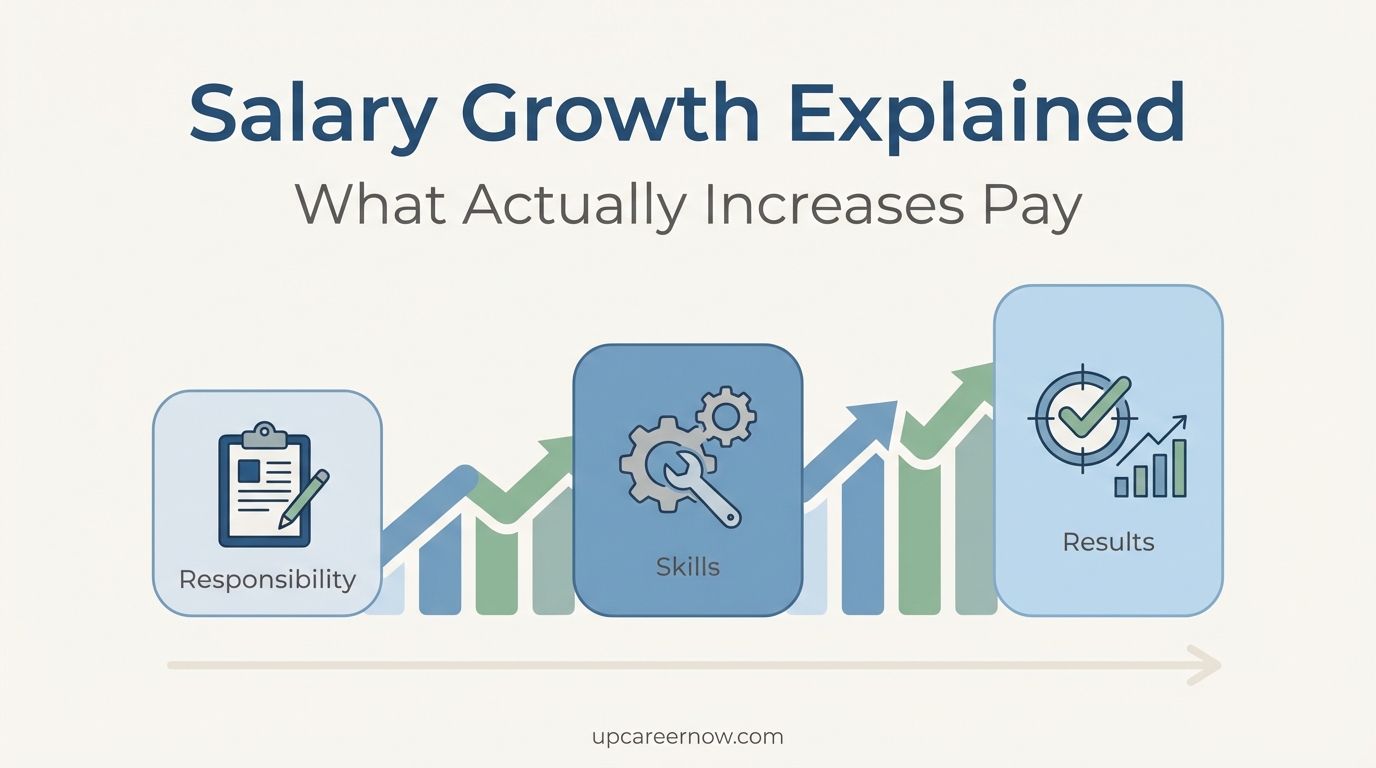
Income grows as responsibility expands
High-income skills pay more when you:
- move from execution to ownership
- handle higher-stakes decisions
- influence outcomes across teams or systems
Responsibility growth usually precedes salary growth.
Where people usually get stuck
- skills exist, but positioning is unclear
- proof发现 is weak or scattered
- communication focuses on effort, not results
Fixing these gaps often unlocks earning potential without learning new skills.
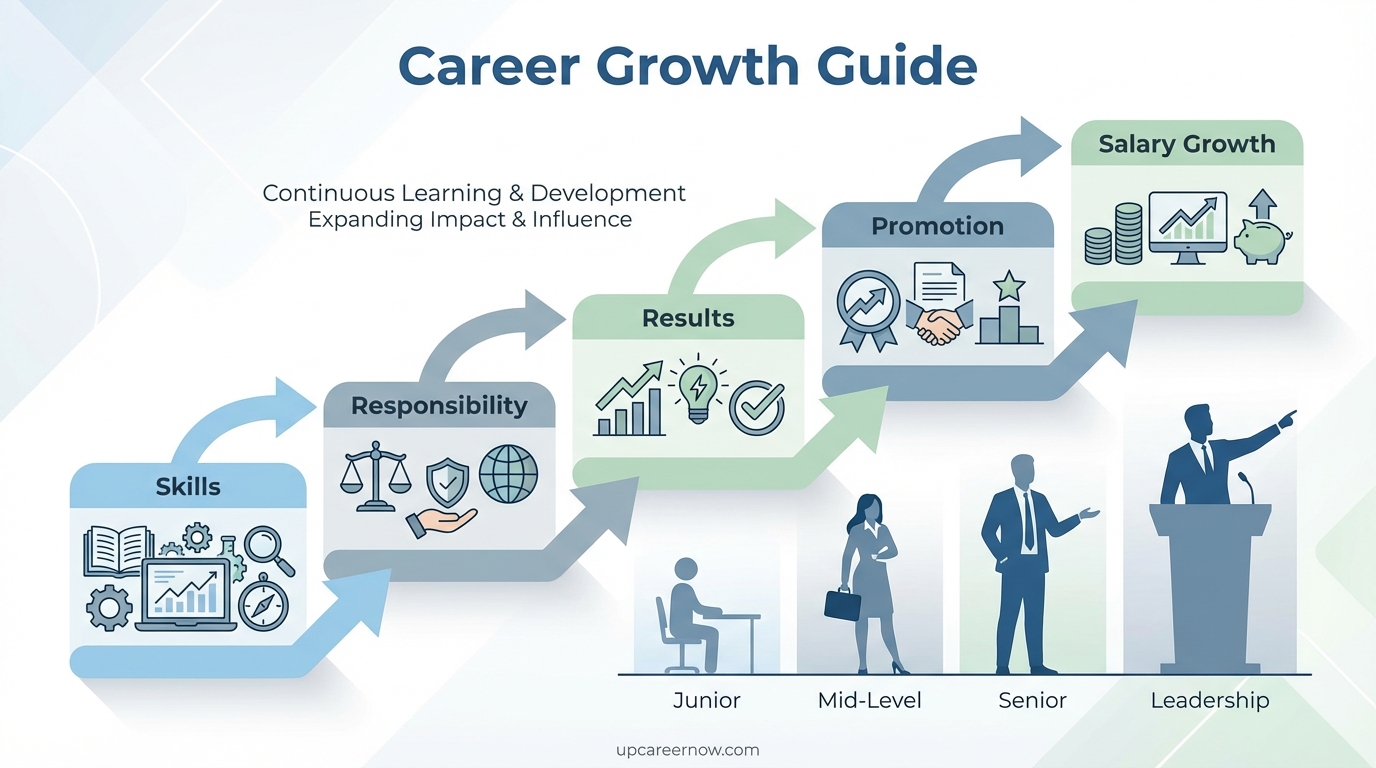
This transition—from skill execution to responsibility—is explained in more detail in our career growth guide, where we break down how skills lead to long-term advancement.
High-Income Skills in Action (Realistic Examples)
High-income skills make the most sense when you can picture how they show up in real work. Below are grounded examples of what “using the skill” actually looks like—so you’re not learning in the dark.
Example 1: Data analysis (decision support, not dashboards)
- What you do: clean data, spot patterns, summarize insights, recommend next steps
- What it improves: faster decisions, fewer mistakes, better planning
- Proof you can create: a simple report + a 1-page insight summary explaining what changed and why
Example 2: Performance marketing (measurable growth)
- What you do: test ads, improve targeting, optimize landing pages, track conversions
- What it improves: revenue growth, customer acquisition, efficiency
- Proof you can create: a mini case study showing what you tested and what improved (no need for big numbers)
Example 3: UX/UI design (outcome-based design)
- What you do: redesign flows, simplify steps, reduce confusion, improve usability
- What it improves: conversion, retention, user satisfaction
- Proof you can create: before/after screens + a short explanation of decisions and user problems solved
Example 4: Operations/process improvement
- What you do: map a workflow, remove bottlenecks, standardize steps, reduce errors
- What it improves: speed, accuracy, cost control
- Proof you can create: a “process before vs after” document + what outcome changed (time saved, fewer errors)
Example 5: Sales (structured communication + trust)
- What you do: qualify leads, explain value, handle objections, follow up consistently
- What it improves: revenue, customer fit, long-term relationships
- Proof you can create: a script framework + a simple tracking sheet showing a repeatable process
These examples show why high-income skills pay well: they create visible outcomes. Once you can explain outcomes clearly, your earning potential becomes easier to justify.
A Simple Way to Decide Which High-Income Skill to Learn
Instead of guessing, use this quick decision table to narrow down high-income skills based on how you naturally work. This reduces trial-and-error and lowers the risk of quitting halfway.
| How You Prefer to Work | Skill Types That Fit Best | Why These Pay Well |
|---|---|---|
| Analytical / Logical | Data analysis, automation, QA | Improve decisions, reduce costly errors |
| Creative + Strategic | UX/UI, content strategy, video | Influence user behavior and growth |
| Hands-on / Practical | IT support, technical ops, trades | Keep systems running, reduce downtime |
| People-focused | Sales, account management, leadership | Drive revenue and coordination |
| Process-oriented | Operations, project coordination | Improve efficiency at scale |
This table isn’t about “best” or “highest paying” in theory. It helps you choose a high-income skill you’re more likely to stick with long enough to see career growth.
Common Mistakes People Make When Chasing High-Income Skills
Most people don’t fail at building high-income skills because the skills don’t work. They fail because of how they approach learning and applying them. Avoiding these mistakes saves months—sometimes years.
Mistake 1: Choosing skills based only on online hype
Trends change fast. Skills chosen only because “everyone is talking about them” often become overcrowded. By the time you’re ready, demand may already be diluted.
Better approach:
Choose skills tied to ongoing business needs—decision-making, systems, revenue, operations.
Mistake 2: Learning endlessly without applying
Many people stay stuck in “learning mode,” consuming content but never producing outcomes.
Better approach:
Turn learning into action as early as possible. Even small projects count as proof.
Mistake 3: Expecting income before trust
High-income skills don’t pay well immediately because trust hasn’t been earned yet.
Better approach:
Focus first on reliability, consistency, and clear outcomes. Income follows trust.
Mistake 4: Ignoring communication
Strong skills don’t help if others can’t understand your impact.
Better approach:
Practice explaining what you did, why it mattered, and what changed as a result—in simple terms.
Mistake 5: Switching skills too quickly
Jumping from one skill to another resets progress and delays career growth.
Better approach:
Commit to one high-income skill long enough to build confidence, proof, and momentum.
How High-Income Skills Support Long-Term Career Growth (Not Just Pay)
High-income skills are often marketed as “make more money.” But their real power is bigger: they improve your career growth, not just your paycheck.
They increase your leverage
When you have a skill that directly affects outcomes—revenue, decisions, systems, efficiency—you gain leverage. Leverage means you can:
- handle higher-stakes work
- negotiate better roles
- move across industries more easily
This is why high-income skills often lead to better opportunities even before salary growth shows up.
They expand responsibility naturally
Career growth usually follows responsibility. High-income skills make it easier to earn trust because your work is:
- measurable
- repeatable
- clearly tied to results
Once others rely on your work, your responsibilities expand. Salary growth often follows later.
They protect you from market shifts
Tools change. Job titles change. But skill categories—analysis, systems, communication, operations—stay relevant. That’s why choosing high income skills to learn is also a long-term risk management strategy.
They create “career optionality”
Optionality means you have choices:
- different roles
- different industries
- different income models
- better negotiation power
The best skills with high earning potential don’t lock you into one job. They give you room to grow and adapt.
How This Fits Into a Bigger Career Growth Plan
High-income skills work best when they’re part of a long-term career strategy, not a one-off learning goal. Choosing the right skill is only the first step; the real advantage comes from connecting skills to responsibility, results, and progression over time.
If you’re planning beyond just learning a skill, use this article alongside our career growth guide, which explains how skills, roles, salary growth, and promotions connect as a system rather than isolated moves.
Think of it this way:
- This article helps you choose what high-income skills to learn
- The career growth guide helps you decide how to turn those skills into sustained progress
When skills and career planning work together, income growth becomes more predictable and less stressful.
If you want to understand how high-income skills connect to roles, promotions, and salary progression over time, see our career growth guide for a complete framework.
Limitations & Disclaimer
High-income skills can improve career growth and earning potential, but outcomes depend on many factors—your current experience, consistency, local job market, industry demand, and how well you apply the skill in real work.
Career information on UpCareerNow is provided for general guidance and planning purposes only. Actual outcomes depend on skills, experience, location, and market conditions.
This article is designed to help you choose and learn high-income skills in a realistic way, not to promise specific income results.
Ad & Content Safety Note
This content is educational and informational. It does not guarantee job offers, promotions, or income levels. High-income skills vary in demand and results depending on skill level, proof of work, and market conditions.
Author Bio
Written by: UpCareerNow Career Research Team
Role: Career & Skills Analyst
The UpCareerNow Career Research Team researches skill-based career paths, workforce trends, and practical learning strategies. Their goal is to help readers choose high-income skills responsibly, build proof of work, and develop long-term career growth without hype.
FAQs (END)
What are high-income skills?
High-income skills are skills that scale with responsibility and produce measurable results, making them more likely to support long-term career growth and salary growth.
What are the best high income skills to learn?
The best high income skills to learn are those tied to ongoing business needs—systems, revenue, operations, analysis, and outcome-based design—plus skills you can prove with projects.
How do I choose skills that pay well for me personally?
Choose skills that pay well by matching demand with your work style, learning timeline, and ability to create proof of work. Fit matters as much as pay.
Can profitable skills be learned without a degree?
Yes. Many profitable skills can be learned through focused practice, projects, and proof of work—especially in tech support, analytics, marketing, design, operations, and sales.
How long does it take for high-income skills to increase income?
It varies. Many people see career growth signals in 8–12 weeks, but income growth usually follows after you build trust and consistent results.
Hey Google, what skills have high earning potential?
Skills with high earning potential are usually tied to measurable outcomes like revenue growth, decision support, system reliability, process improvement, and user experience improvement.
References
- U.S. Bureau of Labor Statistics — Occupational outlook and skills/pay context
- OECD — Skills and employment outlook reports
- World Economic Forum — Workforce and skills trend insights
Salary Growth Explained: What Actually Increases Pay

High-Paying Careers Without a Degree: Real Options
Career Growth Guide: Skills, Jobs, and Salary Growth (UpCareerNow)
About The Author
