Editorial note: This guide is for general educational career guidance. It does not guarantee interviews, job offers, salary increases, promotions, or hiring outcomes. Your results may depend on your experience, location, industry, application quality, role fit, and employer decisions.
Quick Answer
A smart job search strategy means applying to better-matched jobs with stronger, more targeted applications instead of sending the same resume everywhere. The best approach is to choose clear target roles, read job descriptions carefully, tailor your resume, track every application, and review your results each week so you can improve your strategy over time.
Many job seekers think success comes from applying to as many jobs as possible. But more applications do not always mean better results. A focused job search can help you save time, reduce confusion, and send applications that are more relevant to the roles you actually want.
What Is a Job Search Strategy?
A job search strategy is a simple plan that helps you decide what jobs to target, how to prepare your application, where to apply, how to follow up, and how to measure progress. Without a strategy, it is easy to apply randomly, forget where you applied, and use the same generic resume for every role.
A good job search strategy answers these questions:
- What job titles am I targeting?
- Which industries or companies make sense for me?
- What skills and experience do I want to highlight?
- How many quality applications can I send each week?
- How will I track applications and follow-ups?
- How will I improve if I am not getting responses?
The goal is not to make your job search complicated. The goal is to make it organized and realistic.
Why Applying More Is Not Always Better
Applying to many jobs can feel productive, especially when you are under pressure. But if your applications are rushed or poorly matched, you may not get the results you want.
Here are common problems with applying randomly:
- Your resume becomes too generic: Employers may not quickly see why you fit their specific role.
- You apply to weak-fit jobs: Some roles may not match your skills, level, location, or goals.
- You lose track of applications: You may forget which resume version you used or when to follow up.
- You repeat the same mistakes: Without tracking results, you may not know what needs improvement.
A smarter strategy helps you apply with more intention. You can still apply consistently, but each application should have a clear reason behind it.
Step 1: Choose Clear Target Roles
The first step is to decide what kind of job you are actually looking for. If your target is too broad, your resume and application strategy will also become broad.
Instead of saying:
“I am looking for any job in marketing.”
A clearer target would be:
“I am looking for entry-level digital marketing assistant, social media coordinator, or content marketing roles where I can use writing, research, basic analytics, and campaign support skills.”
This gives your job search direction. It also helps you choose better keywords, write a stronger resume summary, and avoid wasting time on jobs that do not match your goals.
Still unsure which jobs you should target? Start with How to Choose a Career Path When You Feel Confused to narrow your direction, then use How to Read a Job Description Before Applying to understand what each employer is really asking for.
How to Define Your Target Roles
Write down:
- Two to four job titles you want to target
- Your preferred industry or company type
- Your required location, remote, or hybrid preference
- Your current experience level
- Your strongest skills
- Your must-have job requirements
If you are still unsure about your direction, read: How to Choose a Career Path When You Feel Confused
Suggested internal link: /how-to-choose-a-career-path-when-confused/
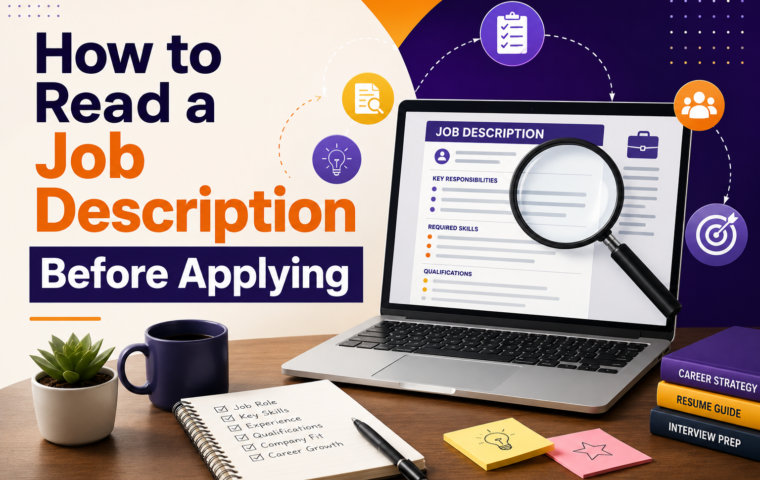
Step 2: Read the Job Description Carefully
Before you apply, read the job description closely. A job description tells you what the employer needs, what skills matter most, and what evidence your resume should show.
Look for these details:
- Main responsibilities: What you will do in the role
- Required skills: Skills the employer expects you to already have
- Preferred skills: Extra skills that may help you stand out
- Repeated keywords: Tools, tasks, or qualities mentioned more than once
- Experience level: Entry-level, mid-level, senior, internship, or trainee
Do not copy the job description word-for-word into your resume. Instead, use it to understand what the employer cares about. Then highlight your real experience, skills, projects, or achievements that match the role.
Recommended related guide: How to Read a Job Description Before Applying
Suggested internal link: /how-to-read-a-job-description-before-applying/
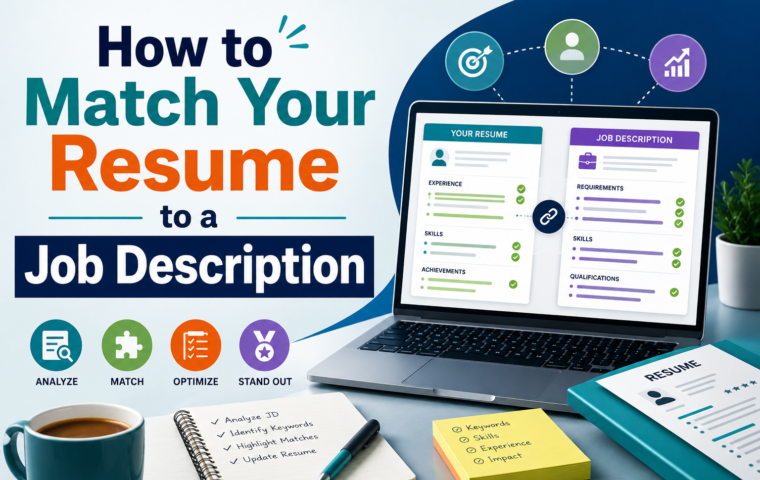
Step 3: Match Your Resume to the Job
A smart job search strategy depends on resume matching. This does not mean creating a completely new resume for every job. It means adjusting your resume so the most relevant information is easier to find.
Focus on these areas:
- Resume summary: Mention your target role and strongest relevant skills.
- Skills section: Include skills that match the job description, if they are accurate for you.
- Work experience: Move the most relevant bullet points higher in each role.
- Projects: Add projects if you have limited work experience.
- Keywords: Use natural, honest wording that reflects the role requirements.
Example of a Generic Resume Bullet
Helped customers and handled daily tasks.
Example of a Stronger Matched Resume Bullet
Handled daily customer support requests through email and phone, documented recurring issues, and helped improve response consistency for service tickets.
The second version is stronger because it explains the task, the communication channel, the responsibility, and the value more clearly.
Related guides to link here:
- Resume Writing Guide —
/resume-writing-guide/ - Resume Keywords —
/resume-keywords/ - ATS Resume Format —
/ats-resume-format/ - How to Write Your Work Experience Section —
/work-experience-section/
Once you understand the role, improve your application with our Resume Writing Guide, Resume Keywords, and ATS Resume Format guides. These will help you make your resume clearer, better matched, and easier for hiring teams to review.
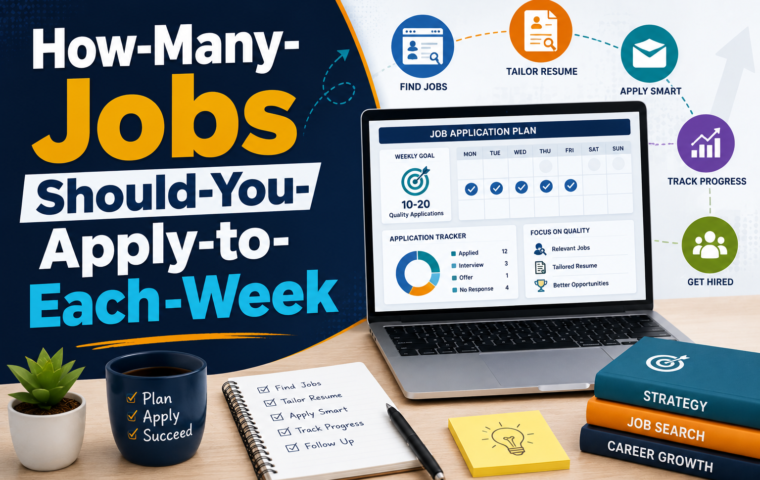
Step 4: Set a Realistic Weekly Application Goal
A smart job search needs consistency. But the right number of applications depends on your situation. A full-time worker may not have the same schedule as a fresh graduate or active job seeker.
Instead of forcing yourself to apply to dozens of jobs every day, set a weekly target you can maintain.
| Job Seeker Type | Suggested Weekly Target | Main Focus |
|---|---|---|
| Fresh graduate | 5 to 10 quality applications | Entry-level roles, internships, trainee roles, and skills proof |
| Employed job seeker | 3 to 7 quality applications | Better-fit roles, careful tailoring, and networking |
| Career changer | 5 to 8 quality applications | Transferable skills, targeted resume, and portfolio proof |
| Active job seeker | 8 to 15 quality applications | Consistent applications, tracking, follow-up, and interview practice |
These numbers are not strict rules. In some industries, there may be fewer suitable jobs available. In others, you may find more openings. The key is to focus on quality and consistency.
Recommended related guide: How Many Jobs Should You Apply to Each Week?
Suggested internal link: /how-many-jobs-apply-each-week/
Step 5: Create a Simple Application Tracker
If you do not track your job applications, your job search becomes harder to manage. A tracker helps you remember where you applied, which resume you used, and when to follow up.
Your tracker can be a spreadsheet, notebook, document, or project management tool. Keep it simple.
Use These Columns in Your Application Tracker
- Company name
- Job title
- Job link
- Date applied
- Resume version used
- Cover letter or email sent
- Contact person or recruiter name
- Application status
- Follow-up date
- Notes
Useful Status Labels
- Saved
- Applied
- Followed up
- Phone screen
- Interview scheduled
- Rejected
- No response
- Offer received
Tracking helps you see patterns. For example, if you apply to 25 jobs and get no responses, the issue may be your resume, role fit, keywords, or application quality. If you get interviews but no offers, you may need stronger interview preparation.
Recommended related guide: How to Build a Weekly Job Search Routine
Suggested internal link: /how-to-build-a-weekly-job-search-routine/
Step 6: Use Networking Without Sounding Pushy
Job boards are useful, but they should not be your only method. Networking can help you learn about roles, understand companies, and connect with people in your field.
Networking does not mean asking strangers for jobs immediately. A better approach is to ask thoughtful questions, show interest, and build professional conversations.
Simple Networking Message Example
Hello [Name],
I saw that you work in [field or role], and I am currently learning more about this career path. I would appreciate any general advice you may have for someone trying to understand the skills and expectations in this area.
Thank you for your time.
This message is respectful because it does not pressure the person to offer a job. It opens a conversation in a professional way.
After publishing related content, link this section to:
- How to Use LinkedIn for Job Search —
/how-to-use-linkedin-for-job-search/ - How to Message Recruiters on LinkedIn —
/how-to-message-recruiters-on-linkedin/
Step 7: Follow Up Professionally
A follow-up message can be helpful when it is polite, short, and sent at the right time. It should not sound desperate or demanding.
You may follow up when:
- You already had an interview
- The employer gave you a timeline and it has passed
- A recruiter invited further communication
- You have a specific and professional reason to reconnect
Simple Follow-Up Email Template
Subject: Following up on [Job Title] application
Hello [Name],
I hope you are doing well. I wanted to follow up on my application for the [Job Title] role. I am still interested in the opportunity and believe my experience with [relevant skill or experience] could be useful for the team.
Thank you for your time and consideration.
Best regards,
[Your Name]
Avoid sending repeated follow-ups every few days. One thoughtful follow-up is usually enough unless the employer continues the conversation.
Recommended related guide: How to Follow Up After an Interview Without Sounding Desperate
Suggested internal link: /how-to-follow-up-after-an-interview/
Step 8: Review Your Job Search Every Week
A weekly review helps you improve instead of repeating the same approach. Set aside time once a week to look at your applications and results.
Ask yourself:
- How many quality applications did I send?
- Which job titles produced the best responses?
- Did I tailor my resume for each role?
- Did I apply to roles that matched my skills?
- Am I getting no replies, phone screens, interviews, or rejections?
- What should I improve next week?
| Pattern | Possible Issue | What to Improve |
|---|---|---|
| No replies | Resume, role fit, or application quality | Improve resume keywords, tailor more carefully, and target better-fit roles |
| Phone screens but no interviews | Unclear experience match or weak communication | Prepare clearer examples and review job expectations |
| Interviews but no offers | Interview answers or final fit | Practice STAR answers and improve follow-up questions |
| Only weak-fit roles respond | Targeting is too broad | Refine job titles, industries, and required skills |
If interviews are your weak point, read these guides:
- Behavioral Interview STAR Method Examples —
/behavioral-interview-star-method-examples/ - Interview Preparation Guide —
/interview-preparation-guide/ - Common Interview Questions and Best Answers —
/common-interview-questions-best-answers/
Example Weekly Job Search Routine
Here is a simple weekly routine you can adjust to your schedule:
| Day | Main Task |
|---|---|
| Monday | Search for new roles and save the best matches |
| Tuesday | Read job descriptions and shortlist the strongest opportunities |
| Wednesday | Tailor resumes for two to three priority roles |
| Thursday | Submit applications and update your tracker |
| Friday | Network, follow up where appropriate, and review weekly progress |
This routine prevents your job search from becoming random. It also gives you a clear structure for improving each week.
Common Job Search Mistakes to Avoid
- Using the same resume for every job: A generic resume may not show why you fit a specific role.
- Applying without reading the job description: You may miss important requirements or warning signs.
- Only applying to dream jobs: It is good to aim high, but also include realistic matches.
- Ignoring your application tracker: Without tracking, it is harder to follow up and improve.
- Not preparing for interviews early: Interview practice should start before you get the invitation.
- Sending too many rushed applications: Poor-quality applications can waste time.
- Ignoring job scams: Be careful with vague offers, upfront payment requests, and suspicious messages.
Recommended related guide: How to Avoid Job Scams
Suggested internal link: /how-to-avoid-job-scams/
Quick Checklist for a Smarter Job Search
- Choose two to four target job titles.
- Define your preferred industries, locations, and role types.
- Read each job description before applying.
- Match your resume to the role honestly.
- Use keywords naturally from the job description.
- Set a realistic weekly application goal.
- Track every job application.
- Follow up professionally when appropriate.
- Review your results every week.
- Improve your resume, targeting, and interview preparation based on patterns.
If you are applying consistently but not getting responses, your next step should be to review your resume and interview preparation. Read Common Interview Questions and Best Answers, Behavioral Interview STAR Method Examples, and Interview Preparation Guide to strengthen the next stage of your job search.
Final Thoughts
A smart job search strategy is not about applying everywhere. It is about applying with purpose. When you choose better roles, read job descriptions carefully, tailor your resume, track your applications, and review your progress, your job search becomes more organized and easier to improve.
You cannot control every hiring decision, but you can control the quality of your preparation. Start with a clear target, build a weekly routine, and keep improving based on what your results show.
Related Guides
- How to Read a Job Description Before Applying —
/how-to-read-a-job-description-before-applying/ - How to Match Your Resume to a Job Description —
/how-to-match-your-resume-to-a-job-description/ - How Many Jobs Should You Apply to Each Week? —
/how-many-jobs-apply-each-week/ - How to Build a Weekly Job Search Routine —
/how-to-build-a-weekly-job-search-routine/ - Resume Writing Guide —
/resume-writing-guide/ - ATS Resume Format —
/ats-resume-format/ - Resume Keywords —
/resume-keywords/ - Behavioral Interview STAR Method Examples —
/behavioral-interview-star-method-examples/
FAQs
What is the best job search strategy?
The best job search strategy is to target roles that match your skills, read job descriptions carefully, tailor your resume, track applications, and review your results each week. A focused approach is usually more useful than applying randomly to every job opening.
Is it better to apply to more jobs or fewer better-matched jobs?
Fewer better-matched applications are often more useful than many rushed applications. You should still apply consistently, but each application should be relevant, carefully reviewed, and supported by a resume that matches the role.
How many jobs should I apply to each week?
There is no perfect number for everyone. Many job seekers use a target such as 5 to 10 quality applications per week, depending on their schedule, experience, industry, and available openings.
Should I change my resume for every job?
You do not need to rewrite your entire resume every time, but you should adjust the summary, skills, and most relevant bullet points to match the job description honestly.
Why am I not getting interview calls?
Common reasons include weak role fit, a generic resume, missing keywords, unclear work experience, or applying to roles that do not match your current skills. Reviewing your applications weekly can help you find patterns and improve.
References
This guide was prepared using general career guidance principles and publicly available career resources. For additional career research, readers may review:
- CareerOneStop Job Search Resources — CareerOneStop is sponsored by the U.S. Department of Labor and provides job search, resume, and interview resources.
- U.S. Bureau of Labor Statistics Occupational Outlook Handbook — The OOH provides career information about occupations, typical duties, education requirements, pay, and job outlook.
- Federal Trade Commission Job Scams Guide — The FTC explains warning signs of job scams, including requests to pay money to get a job.