Switching careers without losing momentum is possible when you treat the move as a managed transition, not a restart. A low-risk career change keeps your income, credibility, and daily structure intact while you reposition your existing skills toward a better-fitting role.
Most career switches fail for one reason: people act before they have clarity. They apply too broadly, over-learn without building proof, or quit prematurely. A Career Change Roadmap avoids this by sequencing the transition correctly—clarify first, prove next, convert last.
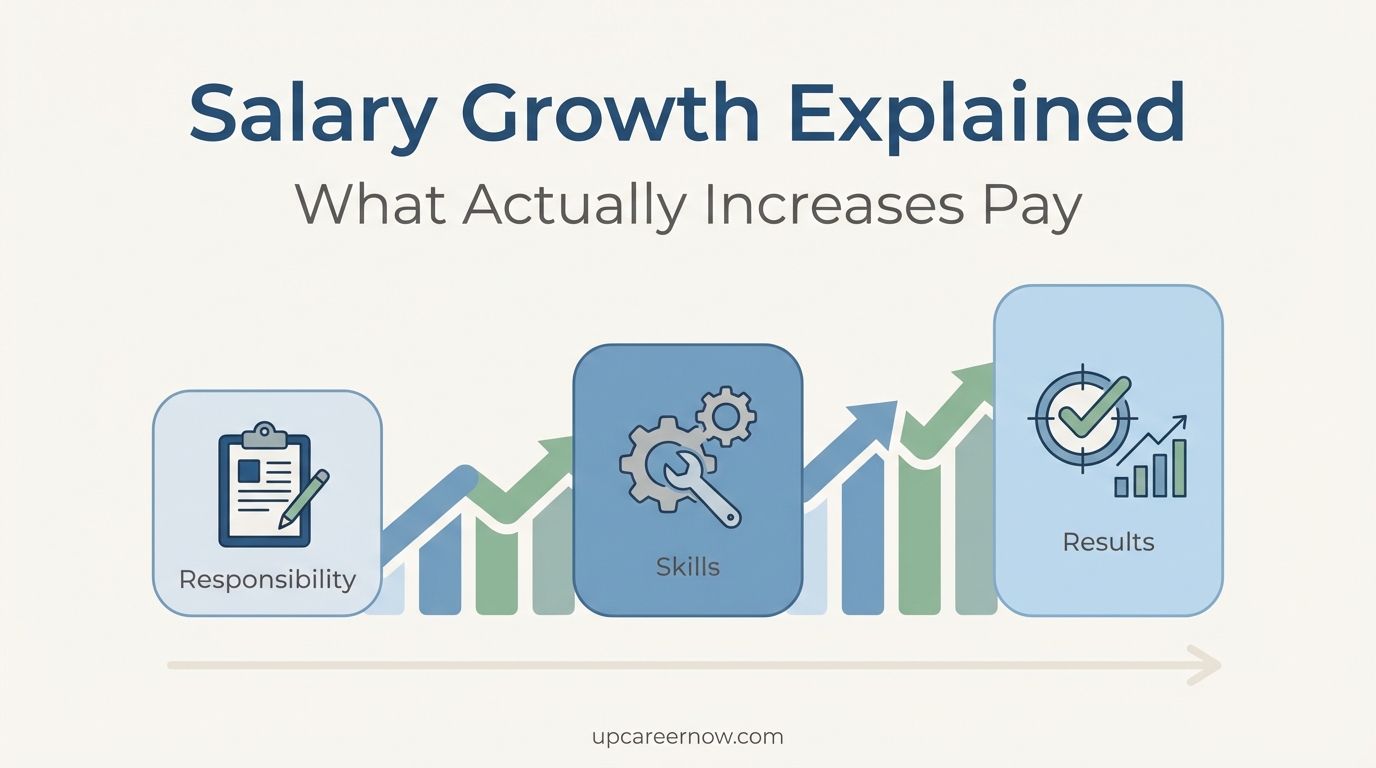
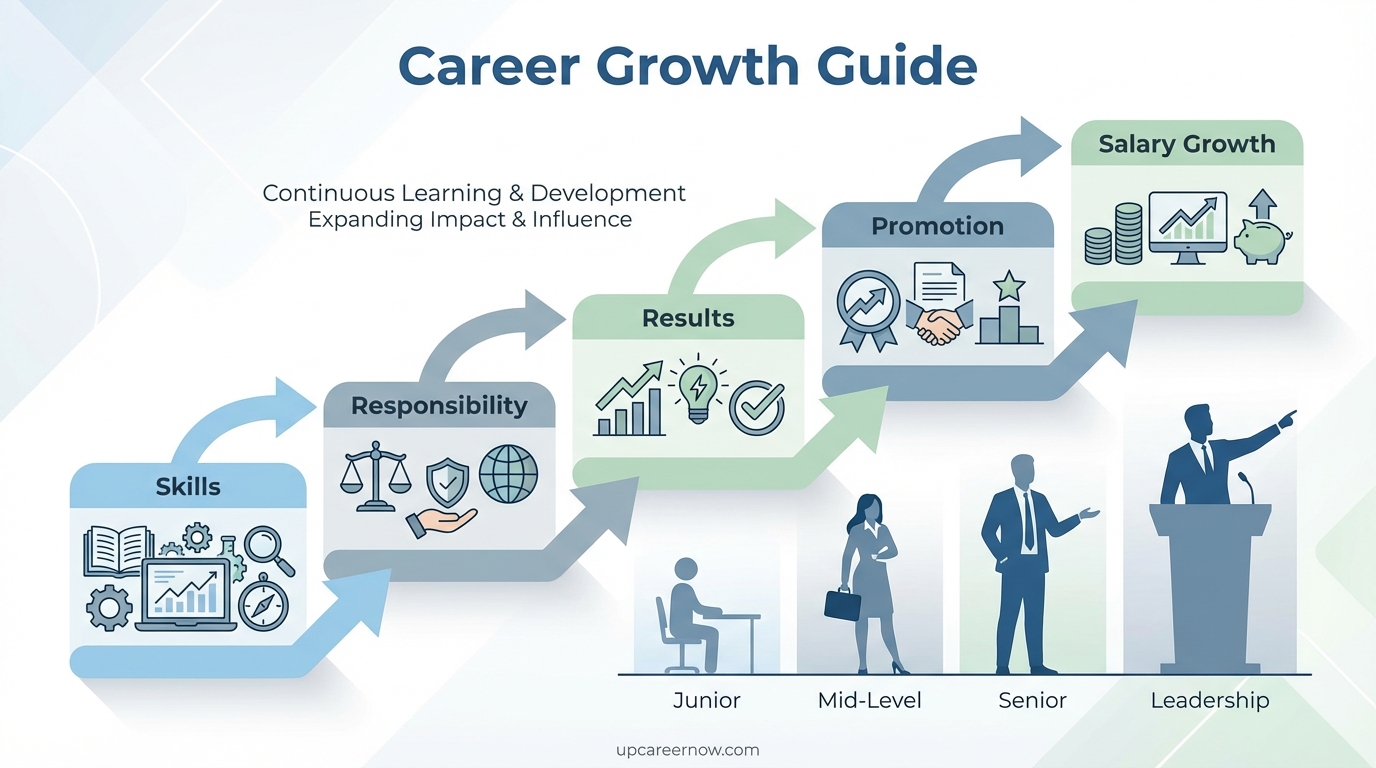
This approach fits directly inside a broader Career Growth Guide, where long-term progress depends on skills, role paths, and salary dynamics—not impulsive moves. Before switching careers, it’s critical to understand how pay actually grows, which roles reward transferable skills, and which paths reduce risk. (Related: Salary growth explained: what increases pay—and what doesn’t.)
Quick Answer
A low-risk Career Change Roadmap focuses on one target role, translates your existing experience into that role’s language, builds role-specific proof in 30–60 days, and uses tight applications and focused networking—so you move forward without starting over.
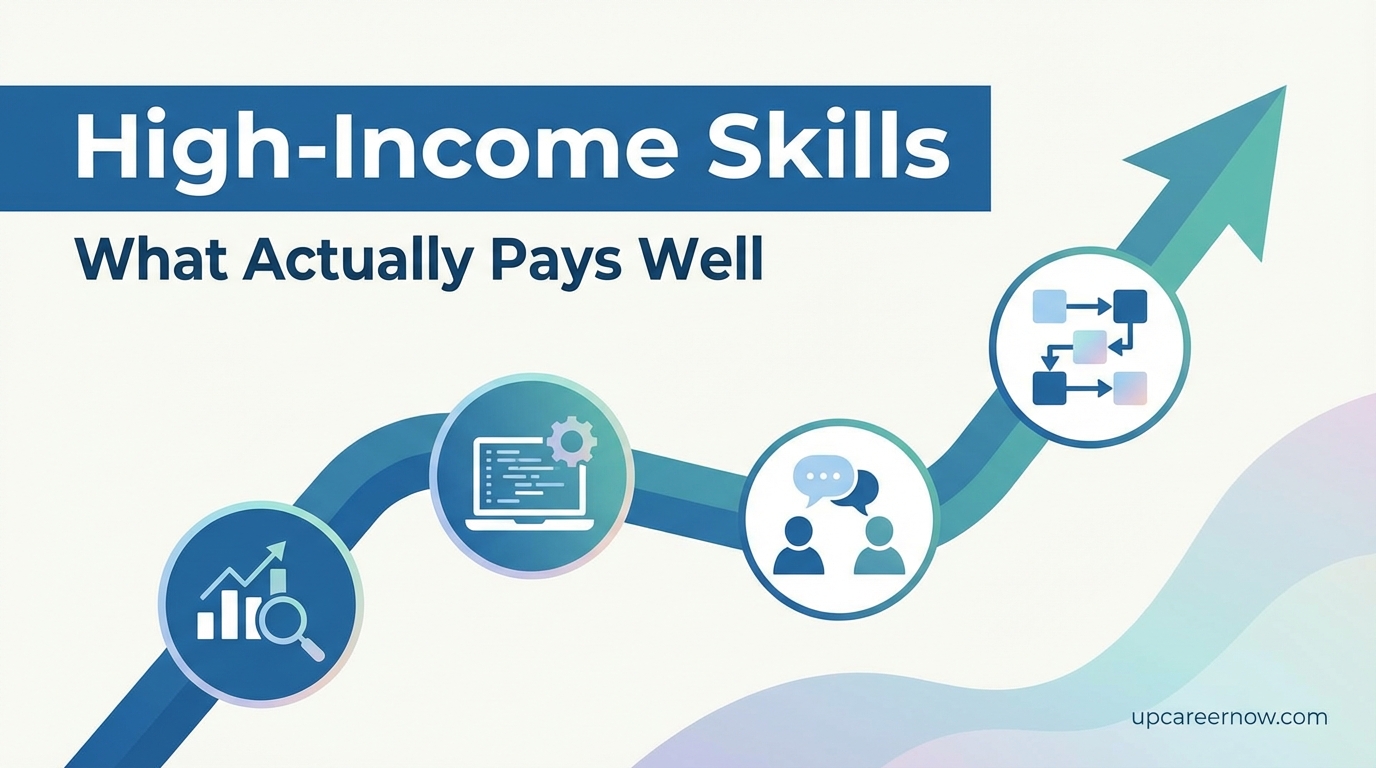
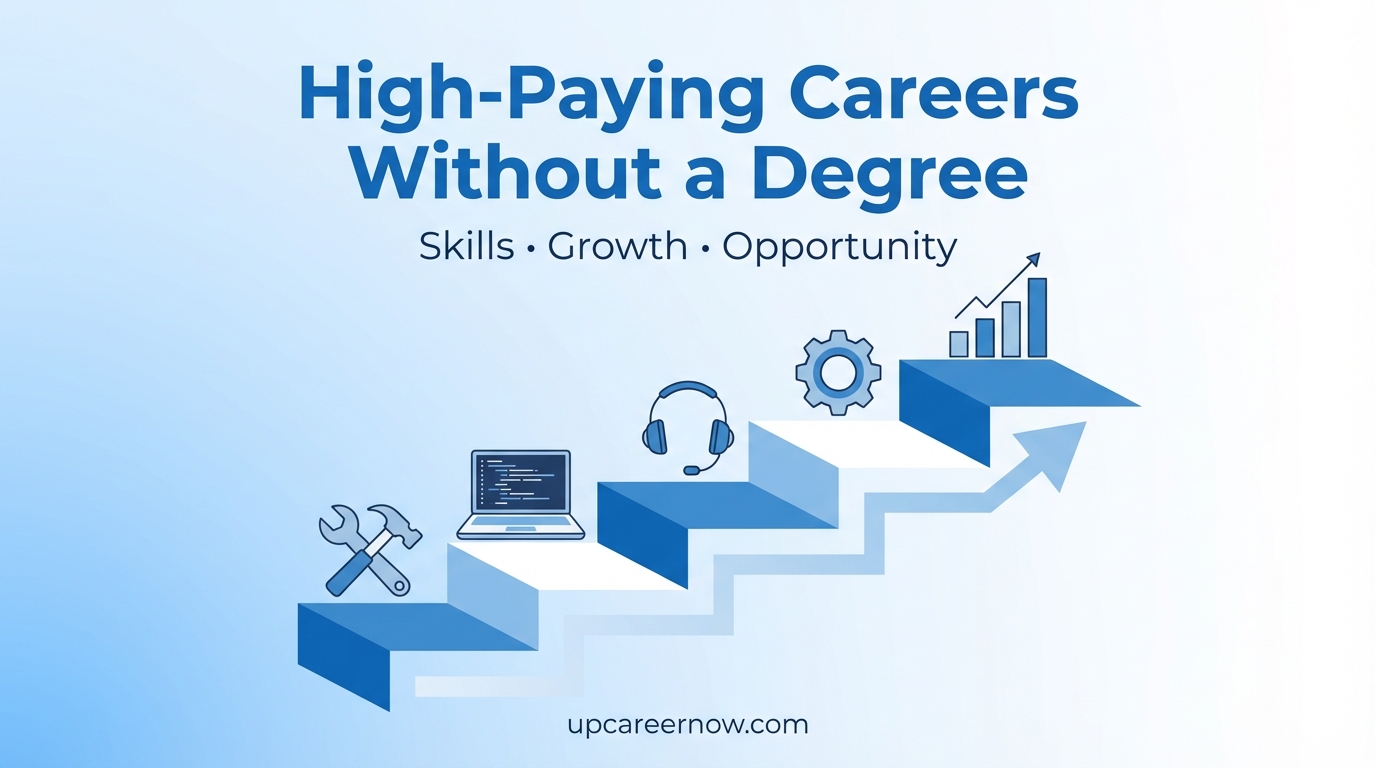
This article shows how to execute that transition step-by-step, while linking to adjacent decisions like skill selection (High-income skills to learn—no hype) and role choice (High-paying careers without a degree).

What a career change really means (and what it doesn’t)
A career change is often framed as a dramatic reset, but in reality, the most successful transitions are selective shifts, not clean slates. When people switch careers without losing momentum, they keep much of what already works—skills, habits, credibility—and change where and how those assets are applied.
In practical terms, a career change usually means:
- moving into a new role or function that values your existing strengths,
- changing industries while keeping the same core skill set,
- or using a bridge role to close a manageable gap before a larger move.
What it does not mean is starting from zero, erasing your work history, or abandoning income stability without a plan. Those approaches increase risk and slow progress.
This distinction matters because long-term career growth depends on compounding advantages. Skills build on skills. Experience builds leverage. Even when you change direction, your previous work should continue contributing to your trajectory.
That’s why a Career Change Roadmap fits naturally alongside topics like High-income skills to learn (no hype) and High-paying careers without a degree. The goal is not to chase novelty, but to redirect proven capabilities toward roles with better growth, pay, or fit.
If your planned move cannot be explained as a logical next step from your current role, the roadmap isn’t ready yet.
Decision Inputs & Outcomes (the pivot reality check)
Before taking action, a low-risk Career Change Roadmap starts with a reality check. This step prevents wasted effort by identifying which inputs are strong—and which must be fixed before you apply, resign, or invest heavily in retraining.
Most stalled career changes have the same root cause: one weak input (usually role clarity or proof) that was ignored. Use the table below to diagnose readiness and decide what to do next.
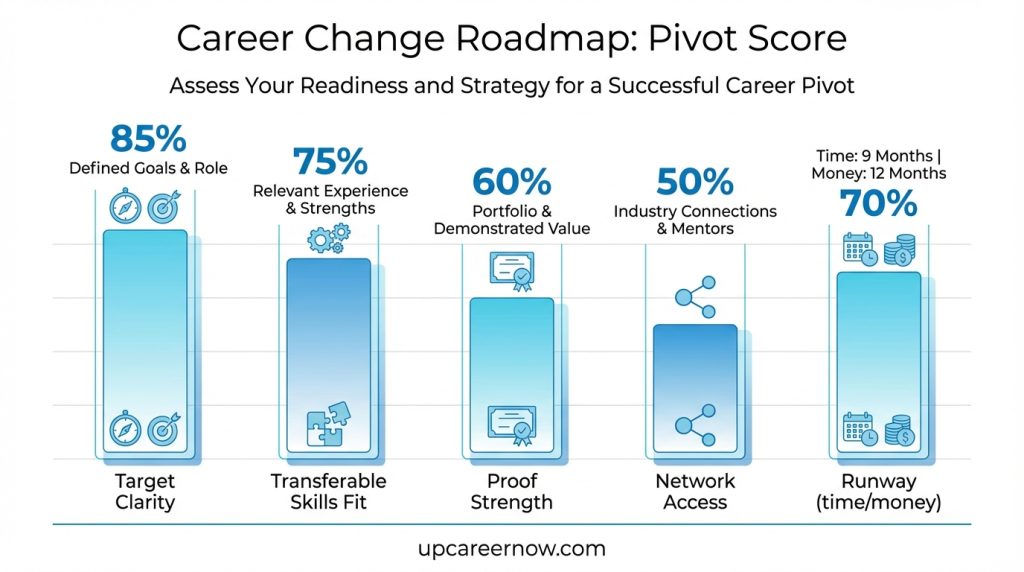
| Decision Input | What “Strong” Looks Like | If It’s Weak, Fix This First | Likely Outcome |
|---|---|---|---|
| Target role clarity | 1–2 specific roles with active job listings | Write a one-paragraph role definition | Focused effort |
| Transferable skills fit | ~40–60% of requirements met today | Map skills and plan 2–3 bridges | No “starting over” |
| Proof | 2–3 role-relevant examples | Build a small Proof Pack | Higher interview rate |
| Network access | 10–15 reachable insiders | Informational conversations | Hidden opportunities |
| Runway | 8–16 weeks of steady effort | Reduce scope or choose adjacent role | Lower risk |
| Story | Clear “why this move makes sense” | Draft a 60-second transition pitch | Less recruiter doubt |
How to use this table:
- If clarity or proof is weak, don’t apply yet—build first.
- If runway is limited, prioritize adjacent roles that protect income.
- If skills fit is borderline, choose learning that produces deliverables (not just certificates).
This check aligns with the broader Career Growth Guide, where growth comes from aligning skills, paths, and pay. It also connects directly to Salary growth explained: what increases pay (and what doesn’t)—because switching roles without improving value rarely improves compensation.
Rule of thumb: fix inputs before increasing volume. Momentum comes from conversion, not activity.
Step-by-step Career Change Roadmap
This Career Change Roadmap is built to protect momentum: you keep stability while you build clarity, proof, and a credible conversion path. Follow the steps in order—skipping steps is the fastest way to burn time.
Step 1: Choose one target role (and one backup)
Low-risk switching starts with precision. “I want to switch careers” is not a target; it’s a feeling.
Do this in 30 minutes:
- Pick one target role and one backup role (maximum).
- Save 10–12 job descriptions for the target role.
- Highlight repeated requirements (skills, tools, responsibilities).
- Write a one-paragraph role definition you can reuse.
Example role definition structure:
Role purpose → top responsibilities → success metrics → common tools → what entry-level looks like.
Interlink note: If your biggest uncertainty is “which roles actually pay well,” use the role list logic from High-paying careers without a degree as a filtering tool before you commit to a target.
Step 2: Translate your experience into the new role’s language
Most career changers lose momentum because they describe past work using their old job’s vocabulary. Hiring teams need to “see” your fit quickly.
Create a translation sheet:
- Old task → new-role equivalent
- Activity → outcome
- Tool/process → transferable method
Example:
- “Handled customer issues” → “Reduced churn risk by resolving escalations and improving onboarding clarity.”
- “Managed schedules” → “Coordinated timelines across stakeholders to prevent delivery delays.”
Step 3: Identify your “bridge skills” (the shortest path to credibility)
A low-risk career change rarely requires mastering everything. It requires mastering the few skills that signal readiness.
Do this:
- From job descriptions, pick 5 recurring skills.
- Label each as: Already strong / Needs proof / Needs learning.
- Choose 2–3 bridge skills to focus on first (highest impact, easiest to prove).
Interlink note: If you’re unsure which skills have the best upside, prioritize the non-hype framework from High-income skills to learn (no hype)—choose skills that improve leverage and are demonstrable.
Step 4: Build a simple Proof Pack (3 items only)
Proof beats passion. A Proof Pack reduces perceived risk and makes your career change story believable.
Build three proof assets aligned with your target role:
- One mini project (real, simulated, freelance, or internal)
- One case study (problem → action → result)
- One skills-to-requirements map (a one-page matrix matching proof to job needs)
Keep it small on purpose. Overbuilding slows momentum. You can expand later once interviews begin.
Step 5: Update your positioning (resume + LinkedIn) for conversion
Career changers often rewrite everything. That’s a mistake. Your goal is to reframe your experience, not erase it.
Your positioning should do three things:
- Lead with the target role identity (not your old title)
- Show transferable outcomes (numbers, impact, scope)
- Reference proof (project/case study) so the switch feels real
Quick positioning formula:
Target role → core strengths → proof → direction
Step 6: Network for accuracy (10 conversations)
Networking protects momentum because it prevents you from building the wrong proof. You’re not asking for a job—you’re validating your plan.
Aim for 10 conversations in 2–4 weeks:
- former colleagues
- alumni/community
- people in your target role
Ask questions like:
- “What separates strong candidates here?”
- “What’s the biggest mistake career changers make?”
- “Which proof matters most in interviews?”
Adjust your Proof Pack and resume based on patterns.
Step 7: Apply with a tight list (and track conversion)
Applying everywhere creates burnout. A low-risk Career Change Roadmap uses controlled volume.
Tight list rules:
- 25–40 total roles
- 8–12 target companies
- Deeply tailor the top 10–15 applications only
Track:
- applications sent
- replies
- interviews
- where you get stuck (resume, proof, story, targeting)
Interlink note: If compensation is a key driver, align your targets with the logic from Salary growth explained: what increases pay (and what doesn’t)—switching roles improves pay only when your value signal improves.
Each pivot keeps most existing skills intact, adds just enough proof, and uses a bridge role to reduce risk. That’s how a Career Change Roadmap preserves momentum.switching roles improves pay only when your value signal improves.
Real-world scenarios (how pivots actually happen)
These scenarios show how a Career Change Roadmap works in practice when the goal is low risk and steady momentum, not a dramatic leap. Each example follows the same pattern: adjacent move → targeted proof → clear positioning.
Scenario 1: Operations / Admin → Project Coordinator
Why this pivot works: Operations roles already involve scheduling, coordination, documentation, and follow-ups—the core of entry-level project work.
- Transferable strengths: timeline management, stakeholder coordination, process tracking
- Bridge skills to prove: basic project planning, risk tracking, status reporting
- Proof to build: one project plan, one risk log, one stakeholder update
- Likely outcome: faster interviews because the skill overlap is obvious
This is a classic adjacent move that preserves income while opening a path toward project management.
Scenario 2: Customer Support → Customer Success
Why this pivot works: Both roles focus on customer outcomes. The difference is moving from reactive problem-solving to proactive value delivery.
- Transferable strengths: communication, troubleshooting, empathy, product knowledge
- Bridge skills to prove: onboarding flows, renewal risk identification
- Proof to build: customer journey map + short retention case study
- Likely outcome: easier internal or lateral move within the same industry
This pivot often improves career path and salary growth because customer success roles are tied to retention and revenue.
Scenario 3: Content Writer → UX Writer / Product Content
Why this pivot works: Writing clarity already exists; the shift is toward user intent, constraints, and microcopy.
- Transferable strengths: clear writing, tone control, audience awareness
- Bridge skills to prove: microcopy decisions, user flows, error states
- Proof to build: before/after copy samples + brief rationale
- Likely outcome: contract or junior roles that lead to specialization
This path aligns well with skill-driven growth discussed in High-income skills to learn (no hype).
Pattern to notice:
Each pivot keeps most existing skills intact, adds just enough proof, and uses a bridge role to reduce risk. That’s how a Career Change Roadmap preserves momentum.
Common mistakes that ruin momentum (and fixes)
A Career Change Roadmap fails most often because people skip fundamentals and replace structure with urgency. These mistakes are common—and fixable—if you catch them early.
Mistake 1: Targeting too many roles
If you apply to 5–10 different job types, you won’t build convincing proof for any one of them.
Fix: Choose one target role and one backup. Your roadmap needs a destination.
Mistake 2: Learning without producing proof
Courses feel productive, but hiring teams need evidence.
Fix: Replace “learning goals” with deliverables (project, case study, skills map). Three proof assets beat five certificates.
Mistake 3: Erasing your past experience
Some career changers rewrite their resume like they’re brand new. That kills credibility.
Fix: Translate your experience into the new role’s outcomes. Keep your track record—change the framing.
Mistake 4: Applying broadly instead of using a tight list
High-volume applications drain energy and reduce conversion because you can’t tailor strategically.
Fix: Use a tight list: 25–40 roles, 8–12 companies, deep tailoring for the top 10–15.
Mistake 5: Skipping runway planning
Without planning time and money, momentum collapses under stress.
Fix: Build an 8–16 week runway. If runway is tight, choose an adjacent role first.
Mistake 6: Chasing pay without improving value
Switching roles doesn’t automatically increase salary unless your value signal improves.
Fix: Align your target with your proof and market value. If pay is a driver, connect this plan to Salary growth explained: what increases pay (and what doesn’t) so your move supports long-term earning power.
Alternatives & next steps (if a full switch isn’t right yet)
A low-risk Career Change Roadmap should always include options that move you forward even if a full switch isn’t realistic right now. If your runway is limited, these alternatives protect stability while building momentum.
Internal transfer (lowest risk)
If you can move teams or functions inside your current company, do it. You already have trust, context, and a track record—so the transition is smoother and faster.
Next step: ask to join cross-functional projects that match your target role.
Bridge or hybrid roles
Bridge roles are stepping-stones that reduce the gap between your current work and your future role.
Example: operations → project coordinator → project manager
Next step: search job titles that combine your current function with your target function.
Side projects for proof
If switching jobs now is too risky, build proof while staying employed.
Next step: create one small project and one case study aligned with real job descriptions.
Skill upgrades with outputs
If you need new skills, choose learning that produces a portfolio asset—not just a certificate.
Interlink note: Use the filter framework from High-income skills to learn (no hype) to choose skills that are demonstrable and valuable.
Role redesign
Sometimes you can reshape your current job by adding responsibilities closer to your target role.
Next step: propose a small initiative (process improvement, reporting, onboarding) that creates relevant experience.
When to trust this guidance
Use this Career Change Roadmap when your goal is a low-risk transition and most of these are true:
- You can name one target role (and one backup) with real job postings.
- You meet enough requirements to build a bridge (roughly 40–60% fit today).
- You can commit consistent weekly time (even 3–5 hours/week) to produce proof.
- You’re willing to use a bridge role if the gap is large.
- You can explain the move in a clear, logical story: strengths → proof → next step.
- You’re tracking conversion (replies, interviews) and adjusting every 2–3 weeks.
If several points are false, don’t force a full switch yet. Use the alternatives section, strengthen proof, and refine your target—then return to the roadmap with more leverage.
Limitations & disclaimer
No roadmap can remove uncertainty from a career change. Outcomes vary based on role requirements, location, hiring cycles, and individual experience. Some occupations have regulated entry paths—such as mandatory degrees, licenses, or supervised experience—which can extend timelines regardless of preparation.
This Career Change Roadmap is designed to improve decision quality and reduce risk, not to guarantee outcomes.
Career information on UpCareerNow is provided for general guidance and planning purposes only. Actual outcomes depend on skills, experience, location, and market conditions.
Ad & Content Safety Note
This article is educational and planning-focused. It avoids income promises, guarantees, or sensational claims. Examples are illustrative, and readers should validate requirements for their specific region and target role before acting.
Author
UpCareerNow Editorial Team
Role: Career content creators
Credential: Career research & career development writing team
FAQs
Is a Career Change Roadmap better than applying to random jobs?
Yes. A Career Change Roadmap focuses effort on one role, builds proof first, and applies strategically—improving conversion and reducing burnout.
How long does a low-risk Career Change Roadmap usually take?
Many people see progress in 8–16 weeks with a clear target role, weekly proof-building, and focused networking. Timelines vary by role.
How do I switch careers without starting over?
Translate your experience into the new role’s language, use a bridge role, and build a small Proof Pack that demonstrates readiness.
What should I do first in a Career Change Roadmap?
Choose one target role, review 10–12 job descriptions, and identify which 2–3 proof assets would most reduce hiring risk.
Do I need a degree to change careers?
Sometimes. It depends on the role and region. Many roles value skills and proof, while others require formal education or licensing.
How does this connect to long-term career growth?
A low-risk switch works best when aligned with skills, role paths, and compensation logic—see the Career Growth Guide and related supporting articles on skills and salary growth.